SOME ACADEMIC PUBLICATIONS
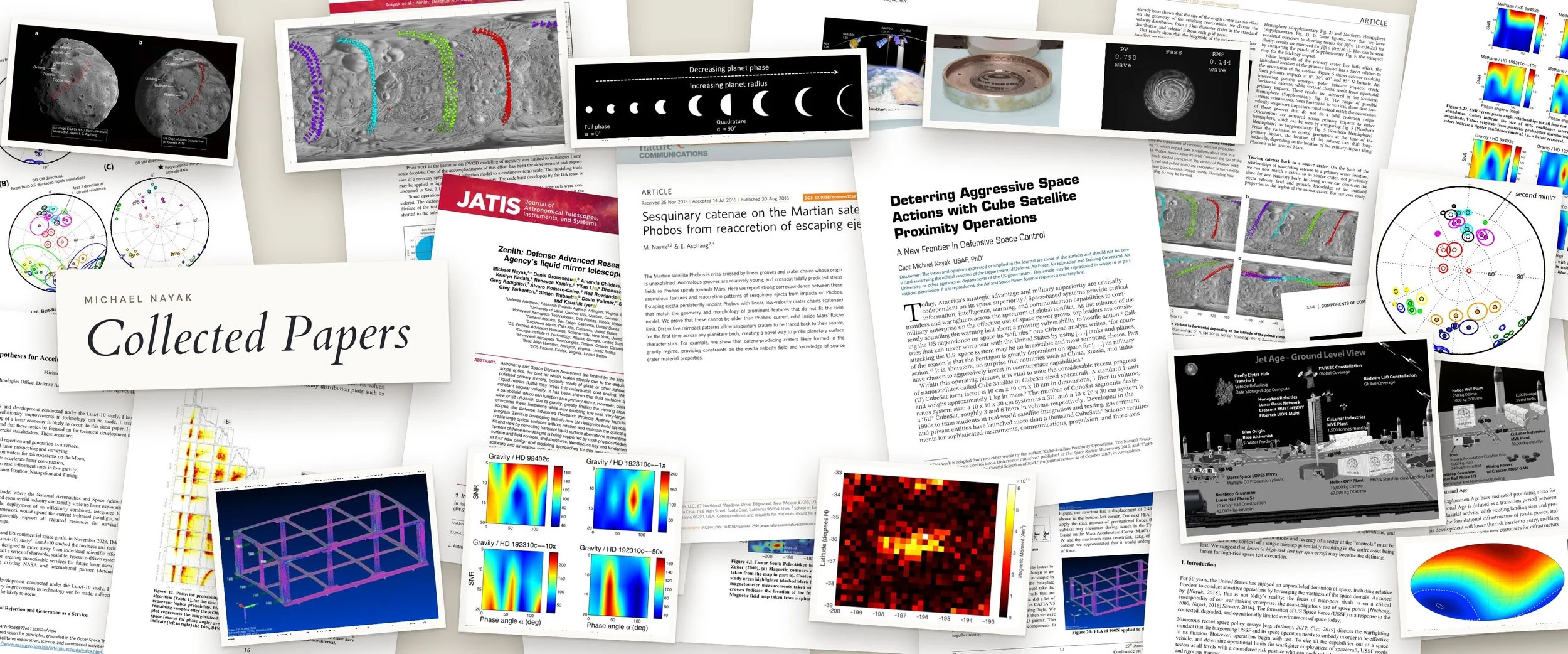
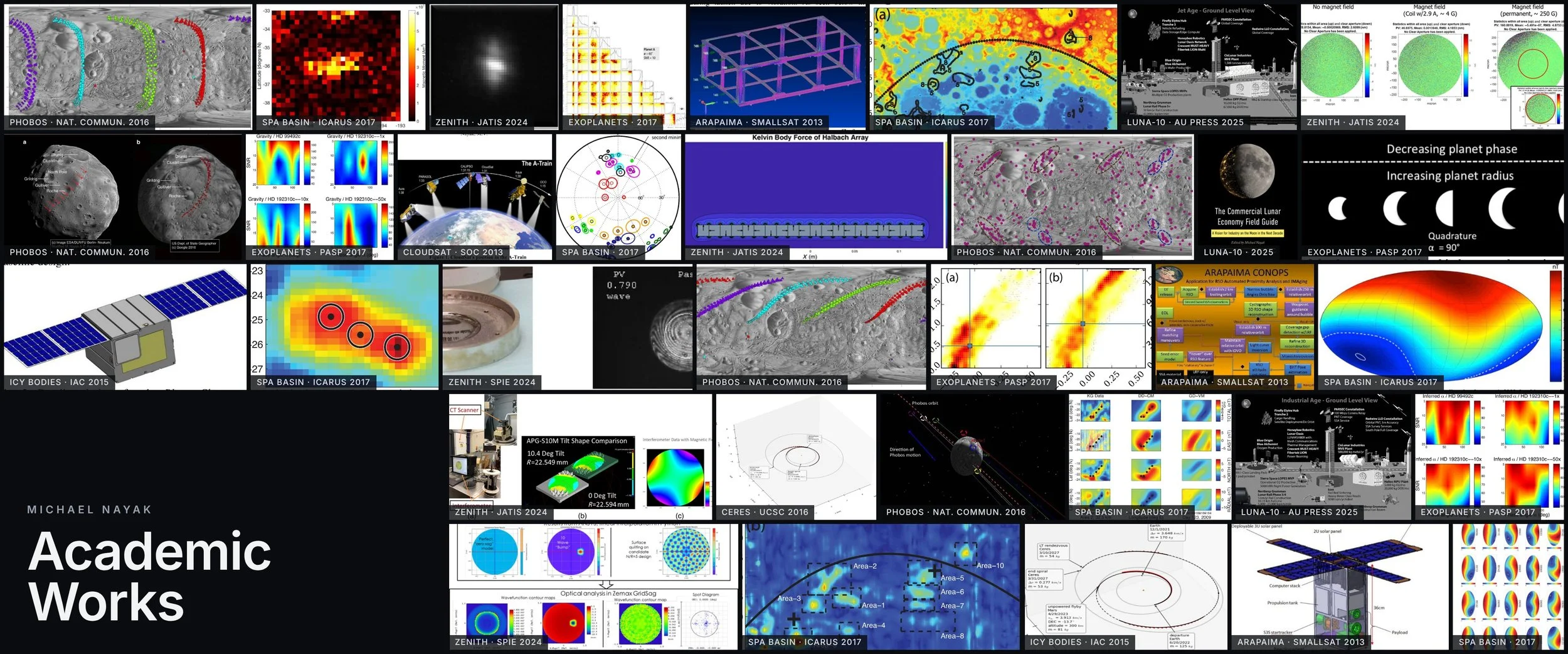
All papers are available for download below.
The Returnable Satellite: The Missing piece of US Space Resilience. Brian Taylor and Michael Nayak.
Space Policy Review.
Orbit has never been cheaper to reach than today, but nearly every satellite is still built to be used once, then abandoned. Static constellations can be held at risk by a widening set of counterspace weapons, disposable platforms are feeding the on-orbit debris population, and the supply chains behind space hardware are increasingly contested, throttling space capability delivered to orbit. We argue that controlled atmospheric re-entry and satellite reuse belong in the category of foundational infrastructure for space resilience and a circular orbital economy, addressing each of these problems. In current military doctrine on space resilience, every named resilience attribute is bounded by the assumption that the satellite is one-time-use (disposable). The returnable satellite is the missing element of a resilient architecture, and amortized economics favor reusable systems across a wide range of assumptions.
The Lunar Development Cooperative: A Transnational Framework for a Sustainable Lunar Economy. Michael R. Castle-Miller, Brent Sherwood, Hoyt Davidson, Steve Wolfe, Andrew Aldrin, Bhavya Lal, Michael Nayak, Pablo Moncada, Duncan Blake.
International Astronautical Congress.
This paper addresses the infrastructure and institutional challenges to creating a sustainable lunar economy. It examines these challenges through the lens of development economics theory and practice, rather than from a purely space-focused perspective. It therefore draws lessons from history and current approaches to creating economies in challenging settings on Earth. Based on these lessons, we argue that a Lunar Development Cooperative (LDC) can provide a supporting framework to enabling an inclusive, open, and prosperous economy on the Moon.
We show how the LDC will be structured both to mobilize sovereign and private investment in lunar infrastructure and to align its own incentives with the long-term interests of the lunar economy and society. LDC-funded infrastructure will be made available to LDC members, which include any space agency or private company agreeing to certain collaboratively developed standards and legally binding norms needed to reduce interference and inefficiency. Consequently, the LDC will simultaneously fund infrastructure that enables a lunar economy, while also implementing institutions that grow and sustain that economy.
We describe ways the LDC can avoid harmful interference at high-demand locations without the need for overly broad safety zones, enable nations with small or non-existent space programs to develop lunar capabilities affordably, and create spaces for cooperation and peaceful exchange even if other areas of the Moon are dominated by nations or private monopolies that stifle competition and access. We also describe mechanisms by which the LDC itself will be kept in check through contractual limitations and accountability mechanisms. Finally, we describe the work that still needs to be done on this framework, which will be led by a proposed research institute, working in collaboration with academic, industry, and policymaking institutions around the world.
Zenith: Defense Advanced Research Projects Agency’s liquid mirror telescope program. Michael Nayak, Denis Brousseau, Amanda Childers, Tomu Hisakado, Kristyn Kadala, Rebecca Kamire, Yifan Li, Dhanushkodi Mariappan, Greg Radighieri, Álvaro Romero-Calvo, Neil Rowlands, Paul Schroeder, Grey Tarkenton, Simon Thibault, Devin Vollmer, Santanu Basu and Kaushik Iyer.
Journal of Astronomical Telescopes, Instruments, and Systems.
Society of Photo-Optical Instrumentation Engineers.
Astronomy and Space Domain Awareness are limited by the size of available telescope optics, the cost for which scales steeply due to the exquisitely ground and polished primary mirrors, typically made of glass or other lightweight substrates. Liquid mirrors (LMs) may break this unfavorable cost scaling. When rotated at a constant angular velocity, it has been shown that fluid surfaces take the form of a paraboloid, which can function as a primary mirror. However, current LMs cannot slew or tilt off-zenith due to gravity, greatly limiting the viewing area in the sky. To overcome these limitations while also enabling low-cost, very-large-aperture telescopes, the Defense Advanced Research Projects Agency launched the Zenith program. Zenith is developing entirely new LM design-for-build approaches that can create large optical surfaces without rotation and maintain the optical quality during tilt and slew by correcting transient liquid surface aberrations in real time. The development of these new designs is being supported by multi-physics models, materials, surface and field controls, and structures. We discuss key and fundamental aspects of four new design and modeling approaches for this new class of LMs, and the software and simulation tools developed by the Zenith program to design tiltable and size-scalable liquid mirrors.
Zenith: a DARPA liquid mirror technology development program. Michael Nayak, Santanu Basu and Kaushik Iyer.
Society of Photo-Optical Instrumentation Engineers.
Astronomy and Space Domain Awareness are limited by the size of available telescope optics, which in turn is related to the cost of exquisitely ground and polished primary mirrors. This creates the cost-size scaling “law” of optics: as the primary mirror gets larger, the cost grows polynomially, limiting mass manufacturing and proliferation. It is possible that liquid mirrors (LMs) may present a solution. When rotated at a constant angular velocity, fluid surfaces take the form of a light-focusing paraboloid with good optical quality. LMs therefore have the potential to break the cost-size scaling law and enable large-diameter optical surfaces. However, fundamental limitations remain. Traditional LMs can only point straight upward (to zenith) and are, therefore, limited in the imagery they can gather. Since the surface is a liquid, any out-of-plane movement disrupts the surface, causing spilling and rendering the imaging surface useless. Rotating machinery also adds complexity and are not scalable to very large mirror sizes. To address these limitations and enable low-cost, very-large-aperture telescopes, DARPA has launched its Zenith program. Zenith will investigate alternate LM designs and develop modeling tools, materials, surface shape controls, and structures to eliminate these limitations. The goal is to demonstrate a 2-m diameter liquid mirror telescope system (LMT) and a 1-m diameter segmented LM that require no liquid motion (rotation) to operate. Achieving Zenith goals will require unique approaches to maintaining good optical quality of a liquid surface in real time during slew and while tilted from the zenith axis. Software and simulation tools specific to liquid mirror performance modeling will be released to the astronomical community as an open-source repository at the conclusion of Phase I of the Zenith program.
Six Hypotheses for Accelerating the Lunar Economy. Michael Nayak.
Based on technical work and development conducted under the LunA-10 study, I have identified six hypotheses where, if revolutionary improvements in technology can be made, I assess that a direct acceleration to the fielding of a lunar economy is likely to occur. In this short paper, I explain these six hypotheses, and recommend that these topics be focused on for technical development in the near-future by government and commercial stakeholders. These areas are:
(1) Centralized thermal rejection and generation as a service,
(2) Widespread orbital lunar prospecting and surveying,
(3) Creating large silicon wafers for microsystems on the Moon,
(4) Biomanufacturing to accelerate lunar construction,
(5) New concepts to increase refinement rates in low gravity,
(6) New concepts for Lunar Position, Navigation and Timing.
Deterring Aggressive Space Actions with Cube Satellite Proximity Operations: A New Frontier in Defensive Space Control. Michael Nayak.
Air and Space Power Journal.
The commercial utility of CubeSats are increasing exponentially. Extrapolating the explosive growth of satellite system miniaturization to a national security context, CubeSat systems are easier for adversarial nations with less sophisticated space programs to design, build, and launch. In considering the question of what the United States should do to better prepare to deter aggressive action in space, an active deterrence strategy to effectively combat small satellite-enabled hostile actions is of vital importance. In parallel with the development of new deterrence strategies that consider small satellites, taking immediate steps to direct integration of CubeSat technologies into the US military space enterprise can help the United States respond proportionally and prevail should deterrence fail.
CubeSat proximity operations: The natural evolution of defensive space control into a deterrence initiative. Michael Nayak.
The Space Review.
This article focuses on the exploding growth of so-called “cube-satellites”, their utility to the national space architecture, the imminent threat they can pose to the present-day military space enterprise as a counterspace tool, and effective deterrence strategies for this asymmetric threat.
Sesquinaries, Magnetics and Atmospheres: Studies of the Terrestrial Moons and Exoplanets. Michael Nayak.
PhD Dissertation, University of California at Santa Cruz.
The surface brightness of Deimos, groove patterns on Phobos, crustal magnetic anomalies on the Moon and the composition of exoplanet atmospheres represent some of the most interesting and puzzling questions in planetary science. Why is Deimos significantly brighter and smoother than its partner moon Phobos? What is the origin of the crater chain “grooves” on Phobos? Are the magnetic anomalies in the lunar South Pole-Aitken basin a remnant of the basin’s formation, or do they owe their existence to a primordial period of lunar dynamo activity? And finally, as visible wavelength telescopes are designed and tested for space-based exoplanet detections, can we use observed albedo spectra to determine radius, gravity, cloud pressure heights and atmospheric compositions for these planets? I use dynamical modeling, magnetic inversions and Markov Chain Monte Carlo retrievals to address these questions. Major findings include 1) the likelihood of isotropic redistribution of reaccreted ejected material on Deimos, 2) the creation of hemispherical catenae from the creation of primary craters on Phobos, which match the locations and geomorphology of several existing grooves well, 3) the first directional magnetic survey of South Pole-Aitken basin anomalies, and a larger than expected diversity in recovered paleopole directions, and 4) the critical importance of considering the effects of planet phase in exoplanet atmosphere retrievals; changing planet phase, when combined with low signal-to-noise observations, can cause several orders of magnitude of uncertainty in atmospheric methane composition and cloud pressure height, among others.
Searching for Organics on the Dwarf Planet Ceres. Michael Nayak.
Masters Thesis, University of California at Santa Cruz.
The Herschel Space Observatory recently detected the presence of water vapor in observations of Ceres, bringing it into the crosshairs of the search for the building blocks of life in the solar system. I present a mission concept designed in collaboration with the NASA Ames Research Center for a two-probe mission to the dwarf planet Ceres, utilizing a pair of small low-cost spacecraft. The primary spacecraft will carry both a mass and an infrared spectrometer to characterize the detected vapor. Shortly after its arrival a second and largely similar spacecraft will impact Ceres to create an impact ejecta “plume” timed to enable a rendezvous and sampling by the primary spacecraft. This enables additional subsurface chemistry, volatile content and material characterization, and new science complementary to the Dawn spacecraft, the first to arrive at Ceres. Science requirements, candidate instruments, rendezvous trajectories, spacecraft design and comparison with Dawn science are detailed.
Cost-Effective Icy Bodies Exploration using Small Satellite Missions. Jonas Jonsson, David Mauro, Jan Stupl, Michael Nayak, Jonathan Aziz, Aaron Cohen, Anthony Colaprete, Andres Dono-Perez, Chad Frost, Benjamin Klamm, Julian McCafferty, Chris McKay, Derek Sears, Michael Soulage, Jason Swenson, Sasha Weston, Fan Yang-Yang.
International Astronautical Congress.
It has long been known that Saturn's moon Enceladus is expelling water-rich plumes into space, providing passing spacecraft with a window into what is hidden underneath its frozen crust. Recent discoveries indicate that similar events could also occur on other bodies in the solar system, such as Jupiter's moon Europa and the dwarf planet Ceres in the asteroid belt. These plumes provide a possible giant leap forward in the search for organics and assessing habitability beyond Earth, stepping stones toward the long-term goal of finding extraterrestrial life. The United States Congress recently requested mission designs to Europa, to fit within a cost cap of $1B, much less than previous mission designs' estimates. Here, innovative cost-effective small spacecraft designs for the deep-space exploration of these icy worlds, using new and emerging enabling technologies, and how to explore the outer solar system on a budget below the cost horizon of a flagship mission, are investigated. Science requirements, instruments selection, rendezvous trajectories, and spacecraft designs are some topics detailed. The mission concepts revolve around a comparably small-sized and low-cost Plume Chaser spacecraft, instrumented to characterize the vapor constituents encountered on its trajectory. In the event that a plume is not encountered, an ejecta plume can be artificially created by a companion spacecraft, the Plume Maker, on the target body at a location timed with the passage of the Plume Chaser spacecraft. Especially in the case of Ceres, such a mission could be a great complementary mission to Dawn, as well as a possible future Europa Clipper mission. The comparably small volume of the spacecraft enables a launch to GTO as a secondary payload, providing multiple launch opportunities per year. Plume Maker's design is nearly identical to the Plume Chaser, and fits within the constraints for a secondary payload launch. The cost-effectiveness of small spacecraft missions enables the exploration of multiple solar system bodies in reasonable timeframes despite budgetary constraints, with only minor adaptations. The work presented here is a summary of concepts targeting icy bodies, such as Europa and Ceres, which have been developed over the last year at NASA Ames Research Center's Mission Design Division. The platforms detailed in this work are also applicable to the cost-effective exploration of many other small icy bodies in the solar system.
How to Train Your Space Tester, Part II: Enabling Capabilities. Evelyn Kent, Jason Gabriel, Anna Gunn-Golkin, Charles Langdon, Michael Nayak, Emily Remeta and Michelle Willett.
Society of Flight Test Engineers.
The need for space test professionals is growing rapidly, due to both the establishment of the US Space Force (USSF) and the extremely rapid growth of the commercial space industry. As there is increasing need to deliver capabilities to both warfighters and commercial customers - in, from, and through space - the future of space test looks bright and complex. A better training foundation is needed to impart test-mindedness to all space professionals to enable this future. There are three critical aspects of foundational training:
(1) Realistic trainers and simulators: Representative simulators are the safest way to gain repetitions in dynamic decision-making, satellite envelope expansion, fault response, and to develop ways to operate through a contested, degraded, and operationally limited (CDO) environment. For warfighters, this extends to tactics employment in an increasingly congested domain. This paper introduces a new term encompassing the variables of space maneuver (GET CLASS) as a standard for Guardian (USSF member) training simulators.
(2) Interoperable Software Tools: As technology progresses and programs make independent decisions, Guardians must continuously adapt to new software tools without reliance on a checklist. Common standards and interfaces must be developed and enforced in the interest of informing a common operating picture of the remote space environment.
(3) Cross-functional networking: Operations, test, engineering, and program management communities must work hand-in-hand to deliver capabilities, blending career fields and mission areas.
Diverse Lunar Paleopoles inferred from South Pole-Aitken Basin Magnetic Anomalies. Michael Nayak, Ian Garrick-Bethell and Doug Hemingway.
Lunar and Planetary Science Conference.
The origin of lunar magnetic anomalies has remained a puzzle since the Apollo program. Recent studies have interpreted the magnetization directions of the Moon’s anomalies to estimate the amounts of true polar wander. However, the magnetic anomalies clustered around the South Pole-Aitken basin (SPA) have so far escaped detailed study. The field structures are complex in this region, but its large extent makes it essential for understanding the Moon’s magnetic history.
Here we isolate discrete anomalies in and around SPA and for the first time estimate their magnetization directions. Using three-axis Kaguya and Lunar Prospector magnetometer data, we find a large diversity in magnetization directions and implied lunar paleopoles. The diversity provides critical constraints on the formation of these anomalies, and helps rule out magnetization by impact-related fields. In addition, the directional diversity implies large amounts of true polar wander on the Moon, and/or that the orientation of the lunar dynamo was highly variable. We also propose that very short timescale true polar wander events could have been captured by SPA ejecta or sesquinary impactors, immediately after the SPA impact, over ~10e4-106 year timescales.
NanoSWARM - A nano-satellite mission to measure particles and fields around the Moon. Ian Garrick-Bethell, Christopher Russell, Carle Pieters, Benjamin Weiss, Jasper Halekas, Andrew Poppe, Davin Larson, David Lawrence, Richard Elphic, Paul Hayne, Richard Blakely, Khan-Hyuk Kim, Young-Jun Choi, Ho Jin, Doug Hemingway, Michael Nayak, Jordi Puig-Suari, Belgacem Jaroux and Steven Warwick.
European Geophysical Union.
The NanoSWARM mission concept uses a fleet of cubesats around the Moon to address a number of open problems in planetary science: 1) The mechanisms of space weathering, 2) The origins of planetary magnetism, 3) The origins, distributions, and migration processes of surface water on airless bodies, and 4) The physics of smallscale magnetospheres. To accomplish these goals, NanoSWARM targets scientifically rich features on the Moon known as swirls. Swirls are high-albedo features correlated with strong magnetic fields and low surface-water. NanoSWARM cubesats will make the first near-surface (<500 m altitude) measurements of solar wind flux and magnetic fields at swirls. NanoSWARM cubesats will also perform low-altitude neutron measurements to provide key constraints on the distribution of polar hydrogen concentrations, which are important volatile sinks in the lunar water cycle. To release its cubesats, NanoSWARM uses a high-heritage mother ship in a low altitude, polar, circular orbit. NanoSWARM’s results will have direct applications to the geophysics, volatile distribution, and plasma physics of numerous other bodies, in particular asteroids and the terrestrial planets. The technologies and methods used by NanoSWARM will enable many new cubesat missions in the next decade, and expand the cubesat paradigm into deep space.
Mars Moons Prospector Mission with CubeSats. Bogdan Udrea, Michael Nayak, Brett Allen, Justin Bourke, Gabriela Casariego, Steven Gosselin, Evan Hiester, Margaret Maier, Jeanmarie Melchert, Chitrang Patel, Leslie Reis, Gregory Smith, Travis Snow, Sarah Williams and Francisco Franquiz.
European Geophysical Union.
The preliminary design of a low-cost Discovery class mission for prospecting Mars moons Phobos and Deimos is undertaken as capstone senior design class in spacecraft design. The mission design is centred on a mothership that carries a dozen of 12U CubeSats, each of 22x22x34cm in size and 24kg in mass. The mothership is equipped with a set of instruments for the investigation of regolith samples, similar to those with identical functions on the Curiosity and the Mars 2020 rovers. The mothership also serves as a telecommunication hub with Earth. Six of the CubeSats have the role of touching down and picking up soil samples for delivery to the mothership for analysis and the six have the role of visually inspecting the moon at close proximity in visible and near and mid infrared light and deploying instruments on the surface of the moons. A suite of miniaturized instruments are investigated for deployment on the CubeSats. The CubeSats are designed to dock with the mothership to be refueled and they heavily leverage the design of the ARAPAIMA proximity operations 6U CubeSat currently in development for the Air Force. The concept of operations envisions the launch of the mothership as a primary payload on a Mars transfer trajectory. After performing a Mars capture maneuver the mothership undertakes autonomous aerobraking to achieve a highly elliptic orbit with the apoapsis at Deimos altitude of 23,460km. Further maneuvering places the mothership in a relative orbit about Deimos from which the CubeSats are deployed. Once the investigation of Deimos is completed the mothership retrieves its CubeSats and maneuver to achieve a relative orbit about Phobos. An investigation similar to that of Deimos is performed. If the mass margins allow it then an extended mission will attempt to confirm the presence of a dust ring between Phobos and Deimos and conduct multi-point atmospheric investigations with supplemental 3U CubeSats.
Mini-magnetospheric phenomena at the Descartes, Airy and Reiner-Gamma Lunar Magnetic Anomalies. Michael Nayak, Ian Garrick-Bethell and Doug Hemingway
Lunar and Planetary Science Conference.
The existence of minimagnetospheres has been proposed as a formation mechanism for lunar swirls, enigmatic high-albedo surface markings co-located with magnetic anomalies, making small-scale magnetic field interactions with the solar wind of interest. We compare magnetic field measurements in the solar wind to source magnetization models constructed from observations in the lunar wake and Earth’s magnetotail. We find three anomalies (Descartes, Airy and Reiner-Gamma) which show evidence for field intensification in the solar wind. When the magnetic field in the solar wind is significantly higher than predicted in wake/tail, the flight path may be below and close to the magnetopause boundary.
How to Train Your Space Tester: Big Picture Challenges Facing Space Test Training. Michael Nayak, Christina Straight, Evelyn Kent, Jarred Langhals.
International Test and Evaluation Association.
To ultimately benefit the space warfighter, test fundamentals, and test conduct under stresses of time and fuel will be where the rubber meets the road. Fundamental big-picture challenges face the enterprise of burgeoning space test, which may also have an impact on the syllabus and training of a possible future “Space Test Pilot School”. This paper specifically discusses four of those challenges, and their impact on US Space Force operators:
1. Testing limits of space capabilities: Space vehicles have traditionally imposed extremely strict operating limits. A culture shift from the top-down will be required before space testers are allowed to test spacecraft limits as freely as air-breathing test pilots do today.
2. Permitted procedures: There are a limited number of contingency procedures at a space operator’s disposal, further constrained within themselves.
3. Safety nets: A discussion of space-specific methods that mitigate risks in operations and the need for more agile fault-detection.
4. Operator proficiency: The qualifications and recency of a tester at the “controls” must be considered in the context of a single misstep potentially resulting in the entire asset being lost. We suggest that hours in high-risk test per spacecraft may become the defining factor for high-risk space test execution.
Real World Applications of Temporal and Phase-Varying Radiometry for Determining Change in Satellite Operational Status. Peter Thomas, Michael Nayak, Paul Kervin, Steven Lyke and Dave Archambeault.
Journal of DoD Research and Engineering.
This article outlines the physics of using radiometry to determine characteristic features, evaluate the validity of results obtained from the software tools developed, show real-world applications using geosynchronous (GEO) satellite object collections, and detail the ability of this work to support future active space surveillance missions. In this article, the authors outline a method to use unresolved, ground-based radiometry collections to infer satellite features such as size, shape, and orientation at GEO distances. This article will show how to use temporal radiometric signatures to estimate the period of rotation for an object. Researchers processed the period of rotation estimate into an initial stability estimate to determine whether an object is three-axis stabilized or tumbling. The researchers’ toolset can estimate the size, period of oscillation, and initial stability of an object using temporal radiometry datasets. These calculated attributes then can be integrated into an autonomous sensor tasking system. Using a list of known objects and their characteristic features, the authors shall show how this tasking system and toolset are together able to autonomously verify whether detected features are consistent with a previously observed baseline. Upon detection of a deviation from the baseline, follow-up radiometry collections for updated feature reports may be generated.
Sesquinary reimpacts dominate surface characteristics on Phobos. Michael Nayak.
Icarus.
Ejecta escaping from a primary impact on a natural satellite can go into orbit about the planet and reimpact either the body of origin or other bodies within the same planetary system after an ex- tended period, creating so-called sesquinary impacts. These have been studied on Earth’s Moon, Deimos, Phobos, Ganymede, Io, Europa, Tethys and Pluto-Charon. Recently it was shown that just-escaping sesquinary ejecta can imprint Phobos with linear, low-velocity crater chains that match the geometry and morphology of existing catenae features (Nayak and Asphaug, Nature Communications). These features were found to be linked to Phobos’ position deep in the gravity well of Mars, and persistent across the range of longitudinal, latitudinal, orbital and conjunctive variations. In this brief communication I quantify this persistence and perform an order of magnitude analysis to show that mass influx from reaccreted sesquinary impactors is a mechanism capable of significant impact to the surface geology. This impact can far exceed that of solar system impactors, a new result with implications for surface age estimates based on crater counting methods.
Fighting a War in Space: The Case for a Space Innovation Force. Michael Nayak.
Astropolitics.
Air Force Space Command (AFSPC) is gearing up to face the challenge of a contested, degraded space environment that may degenerate into a full-on battleground. The U.S. space enterprise needs to be ready to not just respond, but dominate. AFSPC’s Space Mission Force (SMF) concept, to “present space forces capable of operating in a contested and operationally limited environment,” is a start toward this goal. Leveraging a historical case study from the air domain, I suggest that the SMF focus on operator training and tactics may be fundamentally insufficient in the event of a conflict in space with a near-peer adversary. To win a war in space, AFSPC must build rapid breakaway capabilities that can asymmetrically rearrange the Space Order of Battle. This work proposes the formation of a top-down “Space Innovation Force” (SIF) to complement the bottom-up SMF. If appropriately empowered, this autonomous flat-management cadre of SIF warriors provides revolutionary technological capabilities that an enemy will be unable to counter in the near term. Establishing such a SIF cadre also encourages retention of talented technical officers.
Atmospheric Retrieval for Direct Imaging Spectroscopy of Gas Giants In Reflected Light. II. Orbital Phase and Planetary Radius. Michael Nayak, Roxana Lupu, Mark Marley, Jonathan Fortney, Tyler Robinson and Nikole Lewis.
Publications of the Astronomical Society of the Pacific.
Future space-based telescopes, such as the Wide-Field Infrared Survey Telescope (WFIRST), will observe the reflected light spectra of directly imaged extrasolar planets. Interpretation of such data presents a number of novel challenges, including accounting for unknown planet radius and uncertain stellar illumination phase angle. Here, we report on our continued development of Markov Chain Monte Carlo retrieval methods for addressing these issues in the interpretation of such data. Specifically, we explore how the unknown planet radius and potentially poorly known observer-planet-star phase angle impacts retrievals of parameters of interest such as atmospheric methane abundance, cloud properties, and surface gravity. As expected, the uncertainty in retrieved values is a strong function of the signal-to-noise ratio (S/N) of the observed spectra, particularly for low metallicity atmospheres, which lack deep absorption signatures. Meaningful results may only be possible above certain S/N thresholds; for cases across a metallicity range of 1–50 times solar, we find that only an S/N of 20 systematically reproduces a value close to the correct methane abundance at all phase angles. However, even in cases where the phase angle is poorly known we find that the planet radius can be constrained to within a factor of two. We find that uncertainty in planet radius decreases at phase angles past quadrature, as the highly forward-scattering nature of the atmosphere at these geometries limits the possible volume of phase space that relevant parameters can occupy. Finally, we present an estimation of possible improvement that can result from combining retrievals against observations at multiple phase angles.
Magnetization in the South Pole-Aitken basin: Implications for the lunar dynamo and true polar wander. Michael Nayak, Doug Hemingway and Ian Garrick-Bethell.
Icarus.
A number of magnetic anomalies are present along the northern edge of the lunar South Pole-Aitken (SPA) basin. A variety of hypotheses for their formation have been proposed, but an in-depth study of their properties has not been performed. Here we use two different methods to invert for their source body characteristics: one that completely searches a small parameter space of less than ten uniform-strength dipoles per anomaly, and another that uses grids of hundreds of dipoles with variable magnetization strengths. Both methods assume uniform magnetization directions at each anomaly and with one exception, produce nearly the same results. We introduce new Monte Carlo methods to quantify errors in our inversions arising from Gaussian time-dependent changes in the external field and the uncertain geometry of the source bodies. We find the errors from uncertainty in source body geometry are almost always higher. We also find a diverse set of magnetization directions around SPA, which we combine with other physical arguments to conclude that the source bodies were likely magnetized in a dynamo field. Igneous intrusions are a reasonable explanation (Purucker et al., 2012 ) for the directional variability, since they could be intruded over different magnetic epochs. However, the directional variability also implies either surprisingly large amounts of true polar wander or a dynamo not aligned with the lunar spin axis. We also explore the possibility that true polar wander caused by the SPA impact could allow iron-rich SPA ejecta to record a diverse set of magnetic field directions. Some of this material may have also become “sesquinary” ejecta and re-impacted across the Moon on 10e4–10e6 year timescales to capture such changes.
Geomorphology of Impact Features on Tethys Using High Resolution Mosaics. Sierra Ferguson, Alyssa Rhoden, Michael Nayak and Erik Asphaug.
Lunar and Planetary Science Conference.
Ages of the Saturnian satellites are currently being debated within the community ranging from ~4Gyr to 100Myr. Surface age of Tethys is also now being debated because of the debate over the moon’s age. Crater counting is used to interpret the age of planetary surfaces but these interpretations depend on uncertain models of the impactor flux over time. We investigate the cratering record on Tethys to identify evidence of different impactor populations. Craters on Tethys may be caused by debris from Tethys’s co-orbital moons Telesto and Calypso.
Co-Orbital Debris as a Source of Small Impactors and Albedo Features on Tethys. Alyssa Rhoden, Michael Nayak, Erik Asphaug and Sierra Ferguson.
Lunar and Planetary Science Conference.
Ejecta fragments from cratering on Tethys’ coorbital (Trojan) moons result in impacts onto Tethys that are unusual in terms of size distribution, impact velocity, and location. We find that crater ejecta escaping from L4 (Telesto) or L5 (Calypso) can explain two major features of Tethys' geologic record: the lens-shaped albedo feature on the far side, and the overall surplus of 1-20 km diameter impact craters. Further analysis of these connections can help tie together our understanding of Saturnian system dynamical evolution and chronometry.
Effects of mass transfer between Martian satellites on surface geology. Michael Nayak, Francis Nimmo and Bogdan Udrea.
Icarus.
Impacts on planetary bodies can lead to both prompt secondary craters and projectiles that reimpact the target body or nearby companions after an extended period, producing so-called ‘‘sesquinary” craters. Here we examine sesquinary cratering on the moons of Mars. We model the impact that formed Voltaire, the largest crater on the surface of Deimos, and explore the orbital evolution of resulting high-velocity ejecta across 500 years using four-body physics and particle tracking. The bulk of mass transfer to Phobos occurs in the first 1e2 years after impact, while reaccretion of ejecta to Deimos is predicted to continue out to a 1e4 year timescale (cf. Soter, S. [1971]). Relative orbital geometry between Phobos and Deimos plays a significant role; depending on the relative true longitude, mass transfer between the moons can change by a factor of five. Of the ejecta with a velocity range capable of reaching Phobos, 25–42% by mass reaccretes to Deimos and 12–21% impacts Phobos. Ejecta mass transferred to Mars is <10%. We find that the characteristic impact velocity of sesquinaries on Deimos is an order of magnitude smaller than those of background (heliocentric) hypervelocity impactors and will likely result in different crater morphologies. The time-averaged flux of Deimos material to Phobos can be as high as 11% of the background (heliocentric) direct-to-Phobos impactor flux. This relatively minor contribution suggests that spectrally red terrain on Phobos is not caused by Deimos material. However the high-velocity ejecta mass reaccreted to Deimos from a Voltaire-sized impact is comparable to the expected background mass accumulated on Deimos between Voltaire-size events. Considering that the high-velocity ejecta contains only 0.5% of the total mass sent into orbit, sesquinary ejecta from a Voltaire-sized impact could feasibly resurface large parts of the Moon, erasing the previous geological record. Dating the surface of Deimos may be more challenging than previously suspected.
The Plume Chaser mission: Two-spacecraft search for organics on the dwarf planet Ceres. Michael Nayak, David Mauro, Jan Stupl, Jonathan Aziz, Anthony Colaprete, Andres Dono-Perez, Chad Frost, Jonas Jonsson, Chris McKay, Derek Sears, Michael Soulage, Jason Swenson, Fan Yang Yang.
Advances in Space Research.
We present a mission concept designed at NASA Ames Research Center for a two-probe mission to the dwarf planet Ceres, utilizing a set of small low-cost spacecraft. The primary spacecraft will carry both a mass and an infrared spectrometer to characterize water vapor detected to be emanating from Ceres. Shortly after its arrival a second identical spacecraft will impact Ceres to create an ejecta ‘‘plume” timed to enable a rendezvous and sampling by the primary spacecraft. This enables additional subsurface chemistry, volatile content and material characterization, and new science complementary to the Dawn spacecraft, the first to arrive at Ceres. Science requirements, candidate instruments, rendezvous trajectories, spacecraft design and comparison with Dawn science are detailed.
Sesquinary catenae on the Martian satellite Phobos from reaccretion of escaping ejecta. Michael Nayak and Erik Asphaug.
Nature Communications.
The Martian satellite Phobos is criss-crossed by linear grooves and crater chains whose origin is unexplained. Anomalous grooves are relatively young, and crosscut tidally predicted stress fields as Phobos spirals towards Mars. Here we report strong correspondence between these anomalous features and reaccretion patterns of sesquinary ejecta from impacts on Phobos. Escaping ejecta persistently imprint Phobos with linear, low-velocity crater chains (catenae) that match the geometry and morphology of prominent features that do not fit the tidal model. We prove that these cannot be older than Phobos’ current orbit inside Mars’ Roche limit. Distinctive reimpact patterns allow sesquinary craters to be traced back to their source, for the first time across any planetary body, creating a novel way to probe planetary surface characteristics. For example, we show that catena-producing craters likely formed in the gravity regime, providing constraints on the ejecta velocity field and knowledge of source crater material properties.
Nanosatellite Maneuver Planning for Point Cloud Generation With a Rangefinder. Michael Nayak, Jaclyn Beck and Bogdan Udrea.
Institute of Electrical and Electronics Engineers.
Transactions on Aerospace and Electronic Systems.
This paper discusses the application of a single beam laser rangefinder (LRF) to point cloud generation, shape detection, and shape reconstruction for a space-based space situational awareness (SSA) mission. The LRF is part of the payload of a chaser satellite tasked to image a resident space object (RSO). The one-dimensional (1D) nature of LRF returns significantly increases the complexity of the imaging task. To maximize coverage, a method to autonomously detect and fill gaps in sparse point cloud coverage using a narrow field of view (NFOV) camera in conjunction with the LRF is presented. First, relative orbital motion and scanning attitude motion are combined to generate a baseline 3D point cloud of the RSO. The effectiveness of pregenerated command profiles is analyzed by using a weighted edge reconstruction metric that scores how well a point cloud characterizes RSO shape. The design and characterization of multiple relative motion and attitude maneuver profiles, as well as the time and propellant cost of each profile, are presented with the assumption that the entire metrology chain is error free. Next, a three-part algorithm is used that 1) creates a 3D panoramic map from stitched NFOV camera images, 2) correlates the areas of sparse LRF coverage to the map, and 3) generates attitude commands to close the coverage. This provides a consistent and reliable method to register positions of strike points relative to each other and to the NFOV image of the RSO with a priori knowledge of the RSO attitude. Gaps and sparse areas in LRF coverage are covered with strike points; the result is a point cloud of significantly higher resolution than that obtained with preprogrammed attitude profiles. The analysis bears particular relevance to power-constrained nanosatellite missions for space-based SSA for whom a multibeam LRF payload is not feasible. Maneuvers can now be designed on-line in real time; results presented validate the utility of a single-beam LRF as a tool for 3D imaging of RSO shapes.
Pirarucu: The Mars Moon Prospector. Justin Bourke, Bogdan Udrea and Michael Nayak.
Institute of Electrical and Electronics Engineers.
The design of the Pirarucu mission has been undertaken for the NASA/NIA 2015 Revolutionary Aerospace Systems Concepts - Academic Linkage (RASC-AL) competition. The team has completed a design iteration up to the equivalent of a mission concept review (MCR). Pirarucu is a Discovery class mission for prospecting Martian moons Phobos and Deimos. The concept is centered on a LADEE-like mothership that carries a set of twelve 12U Cube-Sats. The mothership is equipped with a suite of instruments similar to those on the Curiosity and the 2020 Mars rover, and is capable of performing laser spectroscopy, geological mapping, and chemical analysis of regolith samples. The mothership also serves as a telecommunication hub with the NASA Deep Space Network (DSN) and communicates directly with the CubeSats on a common data link (CDL) architecture implemented with L3 Communications Net-T technologies. The 12U CubeSats explore the surface of the moon and collect surface samples to be returned to the mothership for analysis. The CubeSats are split into two teams, one team can perform in-situ surface science and the other retrieves samples for analysis on the mothership. Both CubeSat teams can be refueled by the mothership and thus are able to perform multiple excursions to the moon for surface science and sample collection to ensure analysis of a variety of sites on the surfaces of the moons.
Optimal Guidance Trajectories for a Nanosatellite Docking with a Non-Cooperative Resident Space Object. Parv Patel, Bogdan Udrea and Michael Nayak.
Institute of Electrical and Electronics Engineers.
There has been an increasing interest in on-orbit autonomous servicing and repair of satellites as well as controlled active debris removal (ADR) in the space industry recently. One of the most challenging tasks for servicing/repair as well as for ADR is the rendezvous and docking with a non-cooperative tumbling resident space object (RSO). This paper presents a propellant optimal maneuver profile for a servicing spacecraft to perform proximity operations and eventually dock with a non-cooperative target. The strategy is to find an optimal trajectory which will guide the servicing spacecraft to approach the tumbling satellite such that the two vehicles will eventually have no relative motion. Therefore, a subsequent docking or capture operation can be safely performed. The research described here elaborates on the previous work that studied the minimum-control-effort for a 3D docking to a tumbling object considering a full six-degree-of-freedom model of both chaser and target. The current work expands the scope by adding new set of linearized equations of motion that capture the effect of the J2 geopotential disturbance force.
Typically, Hill’s linearized equation of relative motion have been used for this analysis, but they fail to capture the effect of J2 disturbance force on the chaser satellite. Firstly, the effects of the J2 disturbance force is added to the linearized equations of motion by the addition of the J2 terms. Secondly, minimum control-effort optimality condition is examined and propellant optimal trajectories for a relative motion problem are then numerically solved, by using a direct collocation method based on the Gauss pseudospectral approach. The simulation results shows the effect of errors caused by the oblateness of the earth (as described by the J2 potential) on the described relative motion problem. Furthermore, effect of J2 disturbance on the optimal trajectory is discussed for the minimum propellant consumption optimality condition.
A Cooperative Multi-Satellite Mission for Controlled Active Debris Removal from Low Earth Orbit. Bogdan Udrea and Michael Nayak.
Institute of Electrical and Electronics Engineers.
This paper presents the concept of operations and preliminary design of a multi-satellite mission for the active removal of large pieces of debris from low Earth orbit. The mission consists of a mothership minisatellite, that carries six nanosatellites. The mothership acquires a relative orbit of a few kilometers with respect to the piece of orbital debris of interest and determines the attitude state of the debris and good docking locations for the nanosatellites. The nanosatellites deploy sequentially and dock with the piece of debris. Once all the nanosatellites are docked with the debris they cooperatively perform its structural analysis to determine safe maneuvering profiles for its detumble and deorbit. The mothership then docks with the piece of debris and applies maneuvers to deorbit it. Systems engineering budgets have been determined for the mass and propellant and a preliminary mission cost has been estimated. They are presented together with the functional architectures of each spacecraft and the results of mission design obtained with the Systems Tool Kit.
Small-Scale Payload Operations Simulator for Proximity Operations. Kristia Harris, Jared Cokley, Sean Holden, Bogdan Udrea, Shane Stebler, Blake Williams, Michael McGarvey and Michael Nayak.
American Institute of Aeronautics and Astronautics.
The process and studies that make-up the design, construction, and testing of a desktop size spacecraft simulator are detailed. The spacecraft simulator is of the essence to validate and verify the requirements and science algorithms of the Embry-Riddle Aeronautical University (ERAU) cubesat, Application for Resident Space Object (RSO) Autonomous Proximity Analysis and Imaging (ARAPAIMA). The simulator is designed with simple commercial-off-the-shelf (COTS) hardware integrated in a way that allows for accuracy and feedback control in a small form factor.
Attitude Determination and Control System Design for a 6U CubeSat for Proximity Operations and Rendezvous. Francisco Franquiz, Peter Edwards, Bogdan Udrea, Michael Nayak and Thorsten Pueschl.
American Institute of Aeronautics and Astronautics.
The work presented in this paper focuses on the design of an attitude determination and control subsystem (ADCS) for a proximity operation and imaging satellite mission. The ARAPAIMA (Application for Resident Space Object Proximity Analysis and IMAging) mission is carried out by a 6 U CubeSat class satellite equipped with a warm gas propulsion system. The propulsion system comprises an orbital maneuvering thruster which produces 100 mN and a set of 16 reaction control system (RCS) thrusters, of 25 mN each, installed in pairs that generate torques about each of the satellite body axes. The thrust of the RCS thrusters can be modulated over the entire range in steps of 1% due to the rapid solenoid valve actuation. The requirement of the control system is to provide pointing control accuracy of 1 arcmin at 3-sigma in the desired imaging direction. The ADCS employs two control laws. One control law, for large angle maneuvers, implements eigenaxis maneuvering and the other, for accurate pointing, is implemented with PID controllers about each body axis.
Simulations performed for tracking the resident space object flying in a circular orbit of 500 km altitude from a relative orbit of 250 m are used to test the performance of the ADCS. A comparison between a “traditional" ADCS system with reaction wheels and RCS thrusters for their off-loading, and a system with only RCS thrusters, has been performed. The accuracy of the pointing is comparable, the pointing performance as well as the propellant usage for both options are further discussed in the paper. The integration of both controllers within the ADCS and the switching are also discussed.
Application for RSO Automated Proximity Analysis and IMAging (ARAPAIMA): Development of a Nanosat-based Space Situational Awareness Mission. Kristia Harris, Michael McGarvey, Ha Youn Chang, Michaella Ryle, Thomas Ruscitti, Bogdan Udrea, Michael Nayak.
SmallSat.
ARAPAIMA is a proximity operations mission sponsored by the US Air Force Office of Scientific Research (AFOSR) and the Air Force Research Laboratory (AFRL), to perform the in-orbit demonstration of autonomous proximity operations for visible, infrared, and point cloud generation of resident space objects (RSOs) from a nanosat platform. The nanosat is of the 6U CubeSat class, with overall dimensions of 12x24x36cm, a mass of 9.78kg, and has been selected as part of AFRL’s University NanoSat Program (UNP) Cycle 8. This paper describes the mission goals, concept of operations, science objectives and subsystem design and selection, with focus given to a detailed mission analysis and requirements flow-down.
By demonstrating robust, affordable, and responsive rendezvous and proximity operations of a nanosat with an uncooperative RSO, successful completion of the ARAPAIMA mission will validate a range of technologies for space-based space situational awareness (SSA) and debris removal from Low Earth Orbit (LEO). In addition, the mission will validate a set of key technologies and their integration at system level, such as miniaturized commercially available sensors, a miniaturized warm gas propulsion system for CubeSat applications, as well as advanced relative navigation and proximity operations algorithms implemented on a nanosat.
Mission Design and Concept of Operations of a 6U CubeSat Mission for Proximity Operations and RSO Imaging. Bogdan Udrea, Michael Nayak, Michaella Ryle, Nicholas Martini, S. Gillespie, Timothy Grande, Steven Caicedo, S. Wilette, Ayham Baba, Kristia Harris, J. DiGregorio, S. Salzburger, Parv Patel, Adam Huang.
Spacecraft Formation Flying Missions and Technologies.
ARAPAIMA is a proximity operations mission sponsored by the US Air Force Office of Scientific Research and the Air Force Research Laboratory, to perform the in-orbit demonstration of proximity operations for visible, infrared, and three dimensional imaging of resident space objects (RSOs) on a nanosat platform. The nanosat is of the 6U CubeSat class, with overall dimensions of 11x26x34cm and a mass of 9kg. This paper details goals and the concept of operations of the mission and the current status of the design.
Analysis of the Pointing Accuracy of a 6U CubeSat Mission for Proximity Operations and Resident Space Object Imaging. Bogdan Udrea, Michael Nayak, Finn Ankersen.
Spacecraft Formation Flying Missions and Technologies.
This paper describes the results of the initial analysis of the pointing accuracy of a nanosatellite of the 6U (34x22x10cm) CubeSat class. The Application for RSO Proximity Analysis and IMAging (ARAPAIMA) mission is designed to perform in-orbit demonstrations of autonomous proximity operations for visible, infrared, and three-dimensional imaging of resident space objects (RSOs). ARAPAIMA will fly a payload consisting of a commercial off-the-shelf (COTS) infrared (IR) camera and miniature laser rangefinder. The star tracker (STR) from the attitude determination and control system (ADCS) is also used as a payload instrument for imaging in the visible spectrum. The satellite’s actuators include a reaction control system (RCS) comprised of a three-axis RCS thruster and reaction wheel array together with a single orbital maneuvering thruster. The star tracker is complemented by an Inertial Measurement Unit (IMU) and a GPS unit. The satellite’s ability to reject external and internal disturbance torques while maintaining a pointing position relative to a stationary object is tested utilizing only the reaction wheel triad.
End of Life Procedures for Low Earth Orbit Air Force Missions: CloudSat and TacSat-3. Michael Nayak.
SpaceOps Communicator, Volume 10.
At altitudes of less than 2,000 km., fragmentation wreckage caused by accidental explosions aboard spacecraft accounts for 42% of catalogued space debris, spanning all sizes and widely distributed through the orbits of their host satellites. Using operational satellites CloudSat and TacSat-3 as examples, this paper discusses Air Force Space Command, NASA and Department of Defense requirements for mitigation of orbital debris during creation of an End of Life (EOL) plan, and lays out an outline for writing such plans with special applicability to military missions. EOL spacecraft passivation, re-entry survivability analysis, casualty expectation analysis, methods to assess debris generation at EOL due to intentional breakup activities, accidental explosions, and on-orbit collisions; as well as operational execution of EOL for both maneuverable and non-maneuverable space vehicles, with a specific focus on Low Earth Orbit satellites that are unable to relocate to a graveyard orbit, are covered.
Real-Time Attitude Commanding to Detect Coverage Gaps and Generate High Resolution Point Clouds for RSO Shape Characterization with a Laser Rangefinder. Michael Nayak, Jaclyn Beck, Bogdan Udrea.
Institute of Electrical and Electronics Engineers.
This paper expands on previous studies by the authors into 3D imaging with a single-beam laser rangefinder (LRF) by implementing real-time attitude maneuvers of a chaser satellite flying in relative orbit around a resident space object (RSO). Point clouds generated with an LRF are much sparser than those generated with an imaging LIDAR, making it difficult to autonomously distinguish between gaps in coverage and truly empty space. Furthermore, if both the attitude and the shape of the target RSO are unknown, it is particularly difficult to register a collection of LRF strike points together and detect gaps in strike point coverage in real-time. This paper presents the incorporation of a narrow field-of-view (NFOV) camera that detects the strike point on the RSO and supplements LRF distance measurements with image data. This data is used to generate attitude command profiles that efficiently fill LRF coverage gaps and generate high density point clouds, thus maximizing coverage of an unknown RSO. Results obtained so far point the way to a real-time implementation of the algorithm.
A method to detect and close gaps in LRF strike point coverage is presented first. Coverage gap detection is achieved using Voronoi diagrams, where Voronoi cells are centered at the LRF strike points. A three-part algorithm is used that 1) creates a 3D panoramic map from “stitched” NFOV camera images; 2) correlates the areas of sparse LRF coverage to the map; and 3) generates attitude commands to close the coverage gaps. The map provides a consistent and reliable method to register positions of strike points relative to each other and to the NFOV image of the RSO without a priori knowledge of the RSO attitude.
Using this algorithm, gaps and sparse areas in LRF coverage are covered with strike points, allowing for the generation of a higher-resolution point cloud than that obtained with pre-programmed attitude profiles. Attitude maneuvers can now be designed on-line in real-time such that they satisfy the constraints of the chaser spacecraft attitude determination and control system.
Finally, the effectiveness of the camera-aided generation of attitude profiles is analyzed by using a weighted edge reconstruction metric, and comparing results to those generated with pre-programmed attitude maneuvers. The effect of on-line maneuver generation on the overall decrease of time and propellant expenditure to generate an adequate point cloud is also discussed. The analysis bears particular relevance to low-budget, nano-satellite demonstration missions for space-based space situational awareness (SSA).
Design of Relative Motion and Attitude Profiles for Three-Dimensional Resident Space Object Imaging with a Laser Rangefinder. Michael Nayak, Jaclyn Beck, Bogdan Udrea.
Institute of Electrical and Electronics Engineers.
This paper focuses on the aerospace application of a single beam laser rangefinder (LRF) for 3D imaging, shape detection, and reconstruction in the context of a space-based space situational awareness (SSA) mission scenario. The primary limitation to 3D imaging from LRF point clouds is the one-dimensional nature of the single beam measurements. A method that combines relative orbital motion and scanning attitude motion to generate point clouds has been developed and the design and characterization of multiple relative motion and attitude maneuver profiles are presented. The shape and attitude of the RSO are unknown to the chaser satellite however, it is assumed that the RSO is un-cooperative and has fixed inertial pointing. All sensors in the metrology chain are assumed ideal.
A previous study by the authors used pure Keplerian motion to perform a similar 3D imaging mission at an asteroid. A new baseline for proximity operations maneuvers for LRF scanning, based on a waypoint adaptation of the Hill-Clohessy-Wiltshire (HCW) equations is examined. Propellant expenditure for each waypoint profile is discussed and combinations of relative motion and attitude maneuvers that minimize the propellant used to achieve a minimum required point cloud density are studied. Both LRF strike-point coverage and point cloud density are maximized; the capability for 3D shape registration and reconstruction from point clouds generated with a single beam LRF without catalog comparison is proven.
Next, a method of using edge detection algorithms to process a point cloud into a 3D modeled image containing reconstructed shapes is presented. Weighted accuracy of edge reconstruction with respect to the true model is used to calculate a qualitative “metric” that evaluates effectiveness of coverage. Both edge recognition algorithms and the metric are independent of point cloud density, therefore they are utilized to compare the quality of point clouds generated by various attitude and waypoint command profiles. The RSO model incorporates diverse irregular protruding shapes, such as open sensor covers, instrument pods and solar arrays, to test the limits of the algorithms.
This analysis is used to mathematically prove that point clouds generated by a single-beam LRF can achieve sufficient edge recognition accuracy for SSA applications, with meaningful shape information extractable even from sparse point clouds. For all command profiles, reconstruction of RSO shapes from the point clouds generated with the proposed method are compared to the truth model and conclusions are drawn regarding their fidelity.
Experimental Characterization of a Miniature Laser Rangefinder for Resident Space Object Imaging. Kristia Harris, Ayham Baba, Joseph DiGregorio, Timothy Grande, Christian Castillo, Timothy Zuercher, Bogdan Udrea and Michael Nayak.
American Astronautical Society.
ARAPAIMA is a proximity operations mission sponsored by the US Air Force Office of Scientific Research (AFOSR) and the Air Force Research Laboratory (AFRL) designed to perform the in-orbit demonstration of autonomous proximity operations and visible, infrared (IR) and three-dimensional imaging of Resident Space Objects (RSOs) from a nanosat platform. A miniature time-of-flight Laser Range Finder (LRF) similar to the FLIR MLR100 is proposed as a mission payload to generate point clouds of RSOs. This paper is focused on the use of experimental test data to characterize errors inherent within the MLR100. Results of the experiments and test data discussed here are directly applicable to characterizing the flight LRF, as well as constraining stochastic and laser beam pulse dilation error models. The models will be employed in mission imaging algorithms developed to parse LRF point clouds into recognizable RSO shapes. Experiments presented include the use of flat targets made of diverse materials, mounted on a rotating platform. Materials for the targets are representative of those typically used for satellite construction, such as aluminum alloy, Mylar, solar cells, and fine steel mesh. The angle of incidence with respect to the LRF receiver optical axis is varied from 0 to 45 degrees such that the normal to its surface defines a plane containing the receiver optical axis. This simulates returns from various surfaces of an RSO as the ARAPAIMA nano-satellite flies around it. Measurements are taken at 5, 10 and 30m across lighting conditions that simulate daylight, eclipse and terminator transition. Results from the tests, the experimental LRF error model, and additional characterization work on the MLR100 are discussed in light of their applicability to the ARAPAIMA space-based space situational awareness (SSA) mission.
Application of a Laser Rangefinder for Space Object Imaging and Shape Reconstruction. Michael Nayak, Bogdan Udrea, Brandon Marsella and Jaclyn Beck.
American Astronautical Society.
This paper addresses the feasibility of using point clouds generated with a single-beam laser rangefinder (LRF) to reconstruct the three-dimensional shape of an unknown Resident Space Object (RSO), employing a combination of relative motion between the chaser and the RSO and chaser attitude motion. The first step in the analysis is the application of both an LRF and a scanning LIDAR to image and reconstruct the shape of a tri-axial ellipsoid of diffuse constant reflectivity. A single beam LRF, and a multi-beam scanning LIDAR are simulated. Next, the techniques designed above are applied to the imaging of a Resident Space Object (RSO) in the shape of generic telecommunications satellite. Various inclination and attitude maneuver test cases are explored to obtain a desired level of LRF point cloud density. The study concludes that, for error-free measurements, the LRF can effectively create sufficiently dense point clouds for various asteroid and satellite shaped SOs, with low propellant consumption, by exploiting a designed combination of Keplerian and attitude motion. Finally, the technique is further tested through inclusion of two sensor error models. Results will be applied to ARAPAIMA, a nanosatellite mission funded under the US Air Force Office of Scientific Research.
Impact of National Space Policy on US Air Force End of Life Operations and Orbital Debris Mitigation. Michael Nayak.
SpaceOps.
Recent changes to US space policy regarding the execution of satellite End of Life (EOL) procedures have been driven by the rising significance of the orbital debris problem in Low Earth Orbit (LEO). Therefore current EOL plans are written largely with the aim of reducing long-lasting debris that can linger for decades in the orbit of the defunct satellite. Through an exhaustive discussion of US National, Department of Defense and Air Force Space Command policies for mitigation of orbital debris, this paper details several considerations for writing operational EOL plans, with special applicability to military missions and focus on LEO satellites that are unable to relocate to a graveyard orbit. Further, the recent ungainly re-entry of NASA’s Upper Atmosphere Research Satellite (UARS) has highlighted the need to incorporate debris mitigation into the EOL plan after contact has been lost or during re-entry in the interest of public safety. In light of this incident, methods currently used by Air Force Orbital Safety professionals to assess and minimize orbital debris released during and after EOL satellite passivation by accidental explosions, by intentional breakup and due to on-orbit collisions with existing debris are discussed. As integral parts of a holistic EOL plan, re-entry survivability analysis, casualty expectation analysis and intentional breakup activities are also addressed.
CloudSat Anomaly Recovery and Operational Lessons Learned. Michael Nayak, Mona Witkowski, Deborah Vane, Thomas Livermore, Mark Rokey, Marda Barthuli, Ian J. Gravseth, Brian Pieper, Aaron Rodzinak, Steve Silva and Paul Woznick.
SpaceOps.
In April 2011, NASA’s pioneering cloud profiling radar satellite, CloudSat, experienced a battery anomaly that placed it into emergency mode and rendered it operations incapable. All initial attempts to recover the spacecraft failed as the resultant power limitations could not support even the lowest power mode. Originally part of a six-satellite constellation known as the “A-Train”, CloudSat was unable to stay within its assigned control box, posing a threat to other A-Train satellites. CloudSat needed to exit the constellation, but with the tenuous power profile, conducting maneuvers was very risky. The team was able to execute a complex sequence of operations which recovered control, conducted an orbit lower maneuver, and returned the satellite to safe mode, within one 65 minute sunlit period. During the course of the anomaly recovery, the team developed several bold, innovative operational strategies. Details of the investigation into the root-cause and the multiple approaches to revive CloudSat are examined. Satellite communication and commanding during the anomaly are presented. A radical new system of “Daylight Only Operations” (DO-OP) was developed, which cycles the payload and subsystem components off in tune with earth eclipse entry and exit in order to maintain positive power and thermal profiles. The scientific methodology and operational results behind the graduated testing and ramp-up to DO-OP are analyzed. In November 2011, the CloudSat team successfully restored the vehicle to consistent operational collection of cloud radar data during sunlit portions of the orbit. Lessons learned throughout the six-month return-to-operations recovery effort are discussed and offered for application to other R&D satellites, in the context of on-orbit anomaly resolution efforts.
Addressing the Potential for Debris Release during Satellite End of Life Execution. Michael Nayak.
American Institute of Aeronautics and Astronautics.
Space Operations and Support Technical Committee (SOSTC).
The components onboard a spacecraft have a large role in determining the level of detail that must go into End of life (EOL) planning. One of the primary drivers is bringing the spacecraft to a minimum energy configuration, to minimize the destructive capability of its components after contact with it is no longer possible. The large amount of debris floating in LEO and GEO makes impact with the satellite at some later point in its orbit almost inevitable.
A collision that produces an explosion due to the satellite being in a high-energy state can create thousands of debris particles that will remain in the orbit of the original satellite and become a hazard to future missions. Therefore every stored energy source must be deactivated or dissipated to the maximum extent. This work discusses the impact of constituents such as fluids, leftover propellant, pyrotechnics, radioactive material and power components aboard the spacecraft, and mitigation measures to prevent debris creation that should be addressed as part of the satellite’s EOL plan. The role of a formal Failure Mode and Effects Analysis (FMEA) in highlighting areas of concern is also presented.
Addressing Mission Operations Assurance for a Commercial Manned Near-Earth Asteroid Mission. Michael Nayak.
American Institute of Aeronautics and Astronautics.
Space Operations and Support Technical Committee (SOSTC).
Previous work by the author focuses on the prospecting of Near-Earth Asteroids (NEAs). Using current commercially available technology, the goal of this work was to estimate the feasibility of a human spaceflight (HSF) mission to the maximum number of Near Earth Asteroids (NEAs) possible, before the middle of the 21st century, with the ultimate goal of returning to Low Earth Orbit (LEO) with mined materials of commercial and scientific value.
Private enterprise goals and HSF mission considerations bring several previously unencountered issues into play. Mission time must be minimized while maximizing return and simultaneously balancing astronaut health and support issues. In such a scenario, the impact of Mission Operations Assurance and contingency planning can be both crucial and a hindrance to the commercial mission objectives. The recommended risk management approach is presented in three phases: travel to the NEA, operations in the vicinity or on the surface of the NEA and return to Earth, together with the trade-offs to opportunistic mission timelines and milestones.
Risk Mitigation for a Flight Test Program to Transition an On-Orbit Operational Satellite to a Multi-Mission Ground System Architecture. Michael Nayak.
Society of Flight Test Engineers.
In the satellite operations world, the critical concern is ‘health and safety of the vehicle’. The limitations of launching into space include no allowance for maintenance or quick repairs, and even the smallest of actions must be weighed against the risk of losing the multi-million dollar mission. This paper focuses on the testing challenges and risk approach adopted towards the design, implementation, testing, checkout and methodology for operational transition of Tactical Satellite-3’s (TacSat-3) ground system architecture (GSA), while the satellite was already on-orbit and had been operating on its legacy GSA for over two years, under an abbreviated time schedule and price tag. A flexible, agile development methodology allowed the spacecraft operators to detect issues early, and an iterative approach to delivering software capability incorporated these into rolling fixes. Development of the test plan for the final step of transition is covered in detail. Transitioning AFSPC missions away from obsolete legacy GSA is an ongoing effort, and future applicability to other missions is outlined.
Validation and Application of a Preliminary Target Selection Algorithm for the Design of a Near-Earth Asteroid Hopping Mission. Michael Nayak and Bogdan Udrea.
American Astronautical Society.
A prospecting mission with a human crew on board is planned to visit multiple near-Earth asteroids (NEAs); the number of NEAs visited is maximized across a mission timeline limited at three years with a minimum operations time at any NEA of five days. The paper describes the setup and results of an algorithm employed for preliminary asteroid target selection for the mission. The algorithm is used to determine the order of transfer between viable targets, keeping delta-V at a minimum, minimizing the computational burden of optimization and maximizing the number of targets visited within the mission timeline. Based on distance from the originating asteroid, inclination change, and planetary perturbation effects, the algorithm is used to support a decision-tree approach to target selection. Results are validated using Satellite Tool Kit v.9.1 Design Explorer Optimizer and used to plan a five-asteroid mission.
End of Life Procedures for Air Force Missions: CloudSat and TacSat-3. Michael Nayak.
American Astronautical Society
At altitudes of less than 2,000 km., fragmentation wreckage caused by accidental explosions aboard spacecraft accounts for 42% of catalogued space debris, spanning all sizes and widely distributed through the orbits of their host satellites. Using currently operational satellites CloudSat and TacSat-3 as examples, this paper discusses Air Force Space Command, NASA and Department of Defense requirements for mitigation of orbital debris during creation of an End of Life (EOL) plan, and lays out an outline for writing such plans with special applicability to military missions. EOL spacecraft passivation, re-entry survivability analysis, casualty expectation analysis, methods to assess debris generation at EOL due to intentional breakup activities, passivation, accidental explosions, and on-orbit collisions; as well as operational execution of EOL for both maneuverable and non-maneuverable space vehicles, with a specific focus on Low Earth Orbit satellites that are unable to relocate to a graveyard orbit, are covered.